

Rohan (name changed) had spent over ten years managing projects, handling clients and delivering results. He knew his work well and was someone his team could rely on.
But lately, he had started feeling stretched.
The business environment was becoming increasingly competitive. Clients expected better results, senior leaders wanted greater accountability, and his team needed direction and support to keep things moving.
Caught between these expectations, Rohan found himself getting involved in almost every decision. Delegating felt difficult, and he often ended up solving problems that his team could have handled.
During one project discussion, a team member suggested trying a different media publisher. Unlike their regular partners, this publisher measured success through visits rather than leads.
Rohan was unsure. The approach was unfamiliar, and he wasn’t convinced it would deliver the expected results.
His first instinct was to dismiss the suggestion and move ahead with the existing plan.
But he paused.
What if there was something worth exploring?
A small pause can change how you lead
Instead of responding immediately, Rohan asked his team member to explain the idea. He listened, questioned his assumptions and considered what the new approach could bring to the project.
That conversation made him reflect on something bigger.
Was he giving his team enough room to bring new ideas to the table?
Was he so focused on meeting expectations and getting things done that he was missing opportunities to work differently?
He began to see that becoming a more effective manager wasn’t about doing more himself. It was also about changing how he worked with his team.
This gave him an opportunity to rethink his approach through four stages.
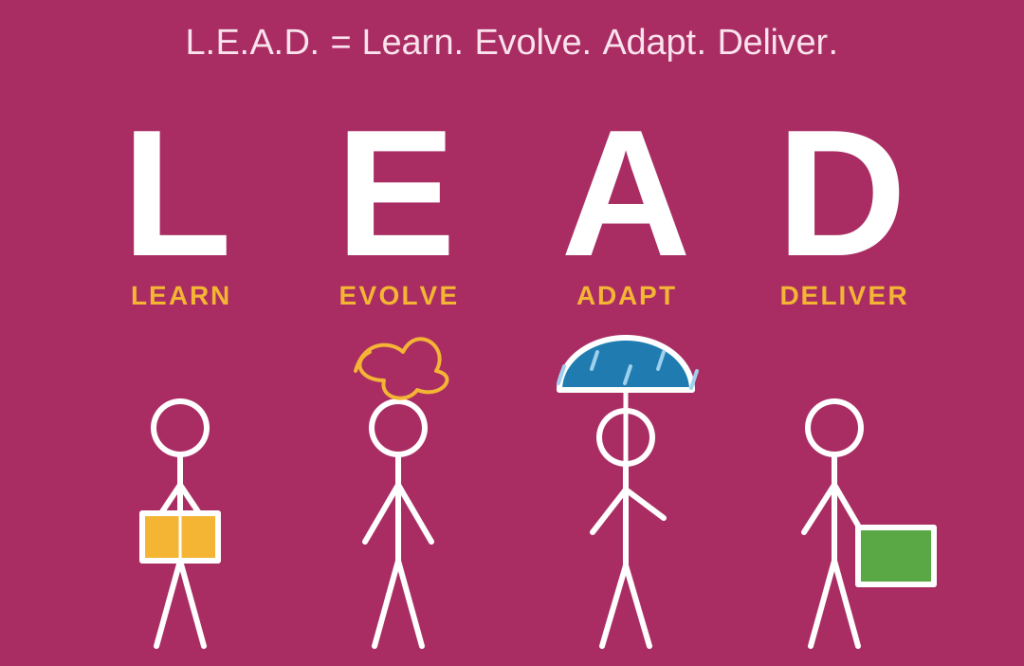
L – Learn: Recognise what you might be overlooking
Rohan began paying closer attention to his own working style.
He realised that he often jumped in with solutions before fully understanding the problem. He also noticed that he wasn’t making enough use of his team’s strengths.
He started asking more questions, listening without interrupting and understanding what his team members could bring to the table.
E – Evolve: Make room for new ways of working
Listening to different ideas also meant being willing to question familiar approaches.
Rohan began giving his team more ownership. Instead of trying to solve every problem himself, he encouraged people to explore solutions and share their recommendations.
He was still accountable for the outcome, but he didn’t need to control every step.
A – Adapt: Know when to change your approach
As the project progressed, Rohan recognised that not every opportunity could be measured in the same way.
He began looking beyond familiar metrics and considered how the new approach could support the project’s objectives.
He also learnt to adjust his approach based on the situation, whether that meant providing direction, asking questions, stepping back or simply listening.
D – Deliver: Bring the team’s strengths together
The team evaluated the new approach, discussed its relevance and presented a recommendation.
For Rohan, the biggest change was in how he approached decisions. Rather than allowing his initial assumptions to shape the outcome, he was learning to listen to different perspectives and consider ideas on their merit.
He was creating space for his team to contribute, think through solutions and take greater ownership.
He was still accountable for delivery, but he was no longer trying to make everything happen himself. He was learning to bring the best out of his team and achieve results together.
What could you approach differently?
Think about a recent situation where a team member challenged your usual way of working.
Before responding, ask yourself:
- Am I listening to understand or preparing to respond?
- Am I recognizing and leveraging my team’s strengths?
Sometimes, the most useful leadership change begins with a pause, a better question or a willingness to consider a different perspective.
At Passion Wheel, we help leaders strengthen self-awareness, build effective leadership behaviours and navigate growing responsibilities.
Looking to grow as a leader? Visit our Contact Us page to explore how we can support you or simply book a slot here:

Working with Smriti as my coach for the past six months has been transformative. Smriti helped me identify areas for growth and develop effective strategies in communication, storytelling, presentation, concentration, and emotional intelligence.